Foucault’s Pendulum
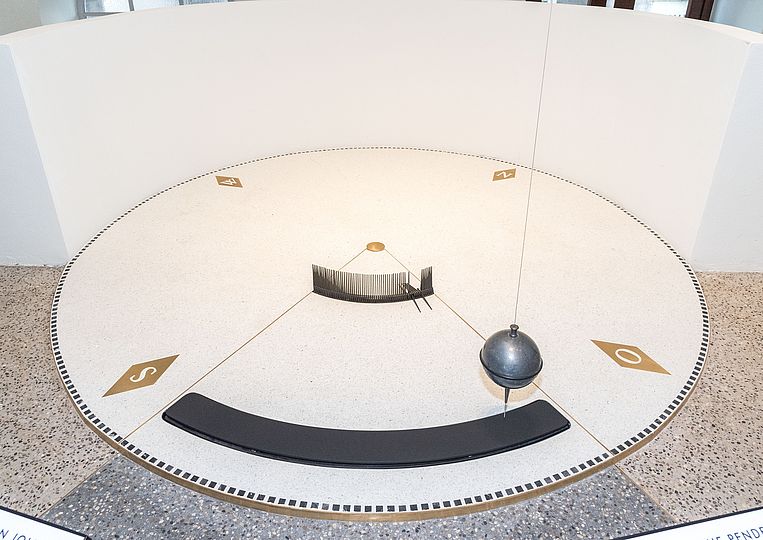
A Foucault pendulum demonstrates the rotation of Earth. In an ideal pendulum, the oscillation plane changes direction relative to the rotating ground. The local precession rate is Ω = ΩEarth sin(latitude). At Munich’s latitude (48.14° N), a full rotation takes about 32.2 hours. For a 60 m pendulum, the small-angle period T = 2π√(L/g) is about 15.5 seconds. The museum’s pendulum hangs in its tower. The home-page model compresses the vertical scale and offers accelerated motion for demonstration.
Porsche 911
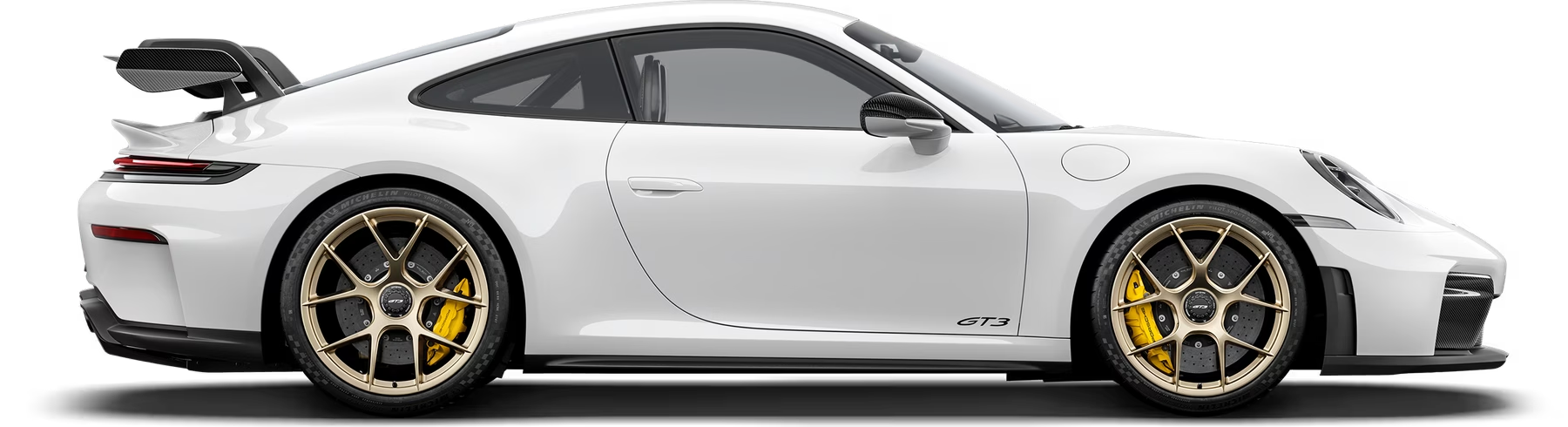
Over six decades of engineering evolution. An extraordinary vehicle architecture.
Introduced in 1963, the Porsche 911 stands as one of the most fascinating examples of automotive engineering. What makes it exceptional is not merely its performance or timeless design, but the continuous refinement of a technically challenging vehicle concept.
Its defining characteristic is the six-cylinder boxer engine positioned behind the rear axle. This unconventional configuration provides excellent traction while presenting engineers with significant challenges in vehicle dynamics.
Rather than abandoning this fundamental architecture, Porsche has spent decades optimizing suspension geometry, weight distribution, aerodynamics, structural rigidity and electronic control systems.
The flat configuration of the boxer engine contributes to a low center of gravity. Modern technologies such as the Porsche dual-clutch transmission (PDK), adaptive suspension systems and active aerodynamics complement this extraordinary architecture.
What makes the Porsche 911 a masterpiece of engineering in my eyes is the ability to transform inherent design disadvantages into distinctive strengths through decades of continuous development.
The 911 demonstrates that exceptional engineering is not always about choosing the simplest technical solution, but about continuously perfecting a challenging concept.
